
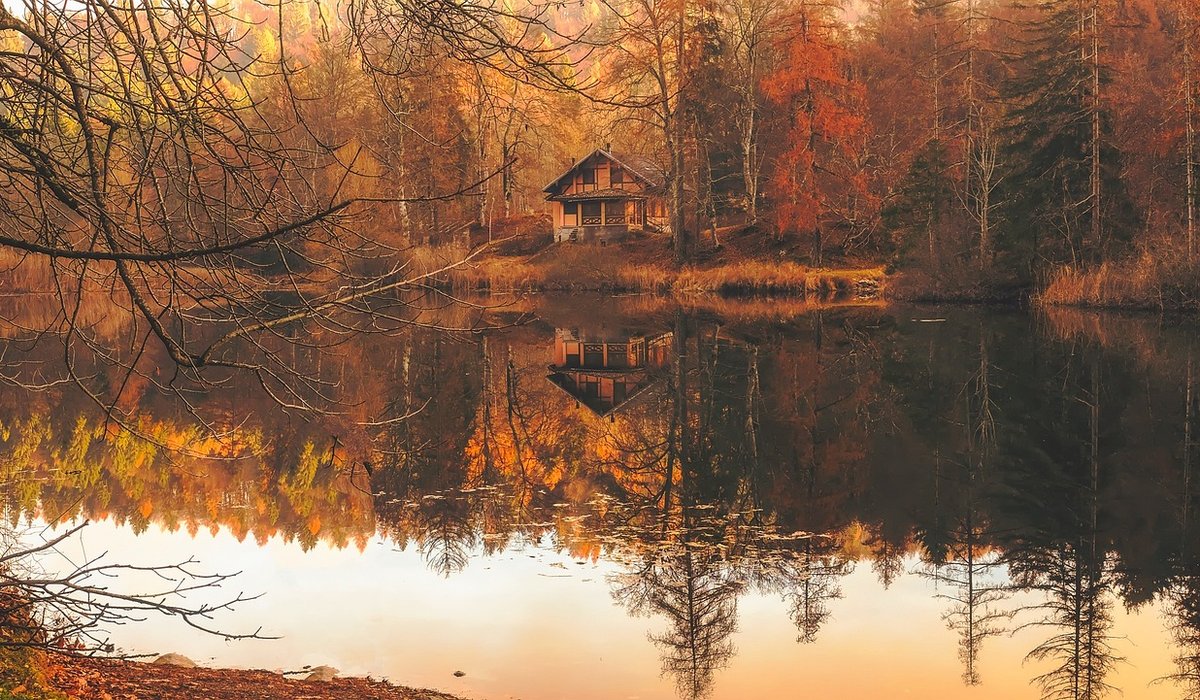
Green Roofs for Small Forest Outbuildings
Why a green roof earns its place in the woods
A small outbuilding — a log store, a workshop, a composting shelter — is usually an unwelcome bright rectangle in a woodland scene. A green roof softens that. Within a season or two the structure reads as another bank of moss and low vegetation, and the building settles into its surroundings rather than announcing itself. There are practical gains too: extra insulation that keeps a workshop cooler in summer and less prone to sharp swings in winter, slower rainwater release into the ground, and a longer life for the waterproof membrane beneath, which is no longer exposed to ultraviolet light and frost.
But a green roof on a shed is not simply a matter of laying turf on boards. Weight, structure and drainage decide whether the idea works, so it pays to think the build-up through before ordering any materials.
Start with the structural sums
The main reason green roofs fail on small outbuildings is that nobody did the arithmetic. Saturated growing medium is heavy: a shallow 40–60 mm sedum system adds roughly 60–90 kg per square metre once wet, and a deeper 100–150 mm build-up planted with ferns and woodland perennials can reach 150–250 kg per square metre. Add snow load, and in exposed upland areas that is not a theoretical concern.
For a new build this is straightforward: specify rafters and purlins for the load, or design a gently sloping deck on a properly braced frame. For retrofit, be honest. A flimsy frame designed for felt and a bit of wind will not carry a saturated roof, and strengthening is often costlier than starting again. A pitch of about 5° to 30° suits lightweight systems; near-flat roofs work if you build in a fall of at least 1:60 and rely on a drainage layer rather than gravity alone.
The layers that make it work
Under the plants, a lightweight green roof is a stack of distinct jobs. From the deck upwards:
- Protection layer — a root-resistant membrane, or a separate root barrier over an existing waterproof covering, so rhizomes cannot work into the deck.
- Drainage layer — a dimpled, studded or granular mat that carries excess water to the outlets and holds a small reservoir for dry spells.
- Filter layer — a geotextile that stops fine particles washing out of the growing medium and clogging the drainage beneath.
- Growing medium — not garden soil. A lightweight, free-draining blend of crushed brick, expanded clay, composted bark and a little loam, kept low in nutrients so plants stay compact rather than growing tall and top-heavy.
- Planting — plugs, mats or seeded blankets, depending on how quickly you want cover and how much variety you want.
On a small outbuilding the whole build-up can often be kept under 150 mm, which matters as much for the fascia depth as for the load.
Choosing plants for a shaded woodland roof
Most green roof guidance is written for sunny, exposed sites and assumes sedum. In a wood, that advice only half applies. Sedums are still useful — drought-tolerant, cheap and quick to establish — but in deep shade they stretch, thin out and lose their colour. A more honest palette for a woodland roof mixes:
- Sedum mats or blankets on the sunnier pitches and ridges, where they will thrive.
- Native mosses and stonecrops that tolerate damp shade and will colonise on their own if the medium is right.
- Woodland perennials — wild strawberry, wood anemone, small ferns, bugle — in the deeper, more sheltered zones, provided the substrate is deep enough.
Avoid anything vigorous, tall or deep-rooting. The aim is a low, dense, self-sustaining carpet, not a roof garden.
Rainwater, edges and drainage
A green roof does not eliminate runoff; it delays and reduces it. In UK conditions a well-established lightweight system will hold back a good proportion of summer rainfall, but during sustained winter downpours it will still discharge. Plan for that.
Keep outlets clear and accessible. A raised gravel or pebble margin of 300–500 mm around the perimeter gives water somewhere to travel, protects the edge from wind uplift, and stops growing medium washing into the gutter. Box or half-round gutters sized generously will cope with the burst that follows a storm, and the outflow can be directed into a water butt, a soakaway or a planted swale rather than straight onto the ground beside the footings. If the building sits near tree roots or a path, that routing is worth designing early.
Wind deserves a thought too. A green roof raises the roof surface slightly and changes the profile, so check that edge trims and fixings suit the local exposure. A gravel margin and a secure trim do more for wind resistance than any amount of extra planting weight.
Maintenance and the long view
A green roof on an outbuilding is low-maintenance, not no-maintenance. Once or twice a year, clear leaves and debris from the outlets and gravel margin, pull out any woody seedlings before their roots take hold, and top up the medium where it has slumped. In a wood, leaf fall is the biggest single threat to drainage, so a spring and an autumn check is usually enough.
Do those small jobs and the roof will repay you: a quieter, better-insulated building that sits in the landscape rather than on it, and a slow, steady release of rainwater into the woodland floor that fed it. In terms of materials and ongoing energy, a modest outbuilding with a well-built living roof is one of the quietest, most sensible things you can put among trees.
tag: Eco Builds

Eleanor Bramley Author
Sourcing timber from nearby woodlands can lower transport emissions and support local craftspeople, provided moisture content and durability are carefully checked.
YOU MAY ALSO LIKE
Using Local Timber in Contemporary Woodland Architecture
Sep 14
10Permitted development rules vary across the UK, so check local planning policies, access, and ecological designations before committing to a woodland cabin project.
read more
Planning Permission Basics for Forest Cabins
Sep 10
10Warm, downward-facing lights on timers reduce disturbance to nocturnal wildlife while keeping paths and entrances safe after dark.
read moreTreehouses
-

ERRIC CATONA
Breathable insulation, vapour control, and careful detailing help timber-frame homes stay warm, dry, and comfortable in damp woodland conditions.
May 19, 2016 at 5.12 pm
Reply
ERRIC CATONA
Regular cleaning, UV-protective finishes, and prompt repairs prevent mould, algae, and rot from shortening the life of timber cladding.
May 19, 2016 at 5.12 pm
Reply -
ERRIC CATONA
Compact layouts, multipurpose rooms, and careful storage reduce the environmental impact of a woodland retreat without sacrificing comfort or character.
May 19, 2016 at 5.12 pm
Reply
Timber Homes
Your email address will not be published.