
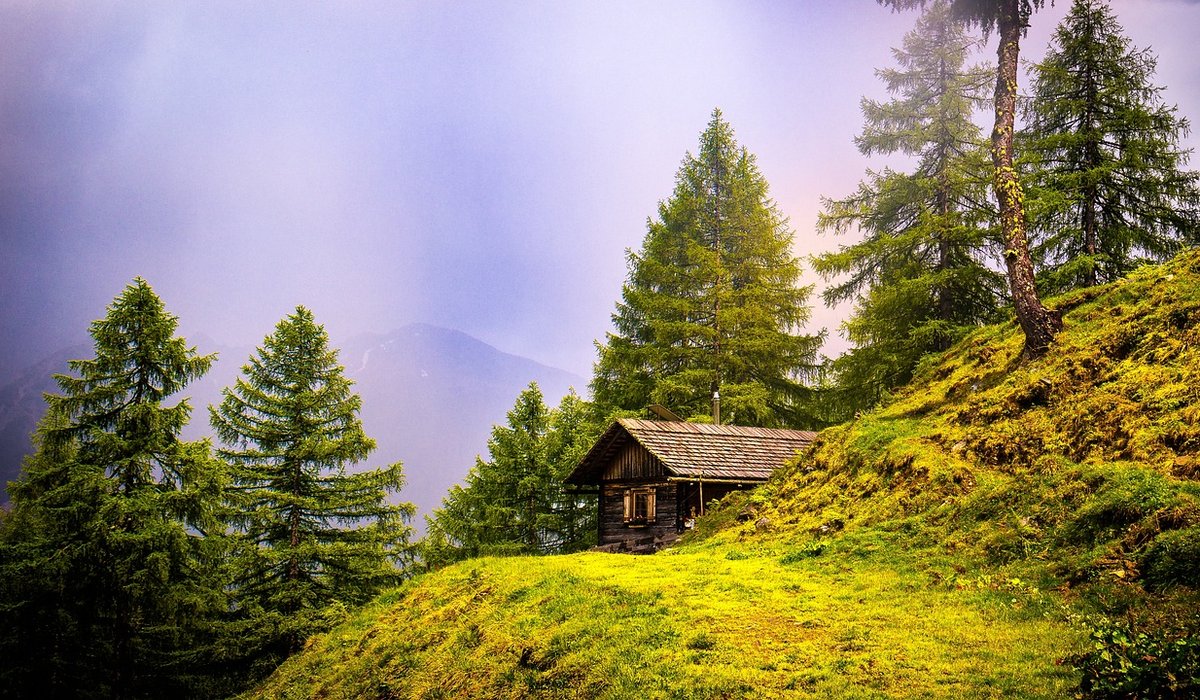
How to Choose a Treehouse Site Among Mature Trees
Start With the Tree, Not the View
It is tempting to pick the site that gives the best outlook — the one that frames the sunset or overlooks the pond. Resist that instinct for a moment. A treehouse site is chosen first by the tree, then by the view, because a platform fixed into an ailing or unsuitable host will cause problems you cannot easily undo.
Spend time with the candidate trees across a few weeks. Look at the crown from a distance and from underneath. Check for fungal brackets, cavities, dead limbs, bark wounds and old pruning scars. A tree with a hollow in the main stem may still be sound, but it needs a professional opinion before it carries a load. Note the species: oak, sweet chestnut and beech offer strong, durable timber; willow, poplar and older ash are more brittle and move more in wind. Age matters too — a vigorous middle-aged tree is generally a better host than either a sapling or a veteran in decline.
Read the Light Through the Canopy
Light decides how the finished treehouse will feel in February, not just in July. Track the sun path across the site at different times of day, and remember that a deciduous canopy will be bare for roughly five months of the year. A platform sitting in heavy summer shade can become a dark, damp, mossy space by November.
- South and south-west aspects give the warmest light and the best natural drying after rain.
- Conifers cast permanent shade and drop acidic needles, which stain timber and suppress ground planting.
- Deep valley bottoms hold cold air and frost; a slightly higher position often feels far more comfortable.
- Consider how leaf litter and branch debris will fall onto the platform, steps and handrails.
If the structure sits close to a boundary, or the tree is covered by a Tree Preservation Order or lies within a conservation area, check the position with your local planning authority before you commit to a design.
Map the Roots Before You Dig Anything
Roots commonly extend well beyond the branch spread — often one and a half to two times the canopy radius — and most of the feeding roots sit within the top 600 mm of soil. As a working rule, the root protection area is a radius of about twelve times the trunk diameter measured at 1.5 m, though species, soil and site conditions all shift that figure.
That area is the tree's lifeline. Compaction, excavation, changes in ground level and severed roots all cause decline that may take years to show. Where you can, keep foundations outside it. Ground screws, small pad footings and pile foundations set well clear of the trunk are far kinder than trenches and mass concrete. Severing a root thicker than 25 mm, especially close to the stem, removes anchorage as well as nourishment — the exact opposite of what a load-bearing structure needs.
Weigh Up Prevailing Winds
In the UK the prevailing wind arrives from the south-west, so most mature trees have already grown a slightly lopsided crown to cope with it. That asymmetry tells you where the loads land. A tree on an exposed ridge, a coastal headland or the edge of a clearing takes far more wind than one sheltered within a stand, and its sway will be transmitted to anything fixed to it.
- Prefer trees with balanced crowns and no pronounced lean.
- Avoid hosts that have been recently thinned or suddenly exposed by felling nearby.
- Watch how the tree behaves in a strong gust — does the whole stem flex, or just the outer branches?
- Remember that a rigid, over-braced platform fights the tree's natural movement instead of working with it.
Design Fixings That Accommodate Growth
A tree does not stop growing once you have built in it. Girth increases, limb unions shift, and a strap that was snug last spring can be biting bark by autumn. The answer is growth-inclusive detailing: adjustable collars, slotted brackets and bolted connections that can be slackened and re-tensioned, inspected at least annually and re-set every few years.
Spread the load across several fixing points rather than concentrating it in one, and attach to the main stem or a substantial limb union rather than high in a slender branch. If the design spans two or more trees, allow for differential movement between them — they will never sway in perfect unison — by using a flexible or sliding connection at one end. Stainless steel or hot-dip galvanised fixings last far longer in damp, leafy conditions than untreated mild steel.
When to Pause and Call in an Arboriculturist
Some sites deserve a professional report before a single post is set. Book one if you are considering a veteran tree, a tree with visible decay, a tree within falling distance of a road or building, or any design involving significant loads. A climbing inspection, decay detection and, where relevant, a pull test will tell you far more than a visual survey ever can.
Plan works outside the bird nesting season where possible, and be prepared to move your chosen position by a couple of metres rather than force a structure into an awkward spot. Two metres of compromise at the design stage protects the tree for decades — and the tree is what makes the treehouse worth building at all.
tag: Treehouses

James Whitcombe Author
Plan a compact cabin around essential zones, using modest footprints, efficient insulation, and simple joinery to reduce material waste and energy demand.
YOU MAY ALSO LIKE
Designing a Compact Timber Cabin for Woodland Living
Sep 20
10A lightweight green roof can blend an outbuilding into its setting, improve insulation, and manage rainwater when the structure and drainage are correctly specified.
read more
Green Roofs for Small Forest Outbuildings
Sep 18
10Sourcing timber from nearby woodlands can lower transport emissions and support local craftspeople, provided moisture content and durability are carefully checked.
read moreTreehouses
-

ERRIC CATONA
Permitted development rules vary across the UK, so check local planning policies, access, and ecological designations before committing to a woodland cabin project.
May 19, 2016 at 5.12 pm
Reply
ERRIC CATONA
Warm, downward-facing lights on timers reduce disturbance to nocturnal wildlife while keeping paths and entrances safe after dark.
May 19, 2016 at 5.12 pm
Reply -
ERRIC CATONA
Breathable insulation, vapour control, and careful detailing help timber-frame homes stay warm, dry, and comfortable in damp woodland conditions.
May 19, 2016 at 5.12 pm
Reply
Timber Homes
Your email address will not be published.